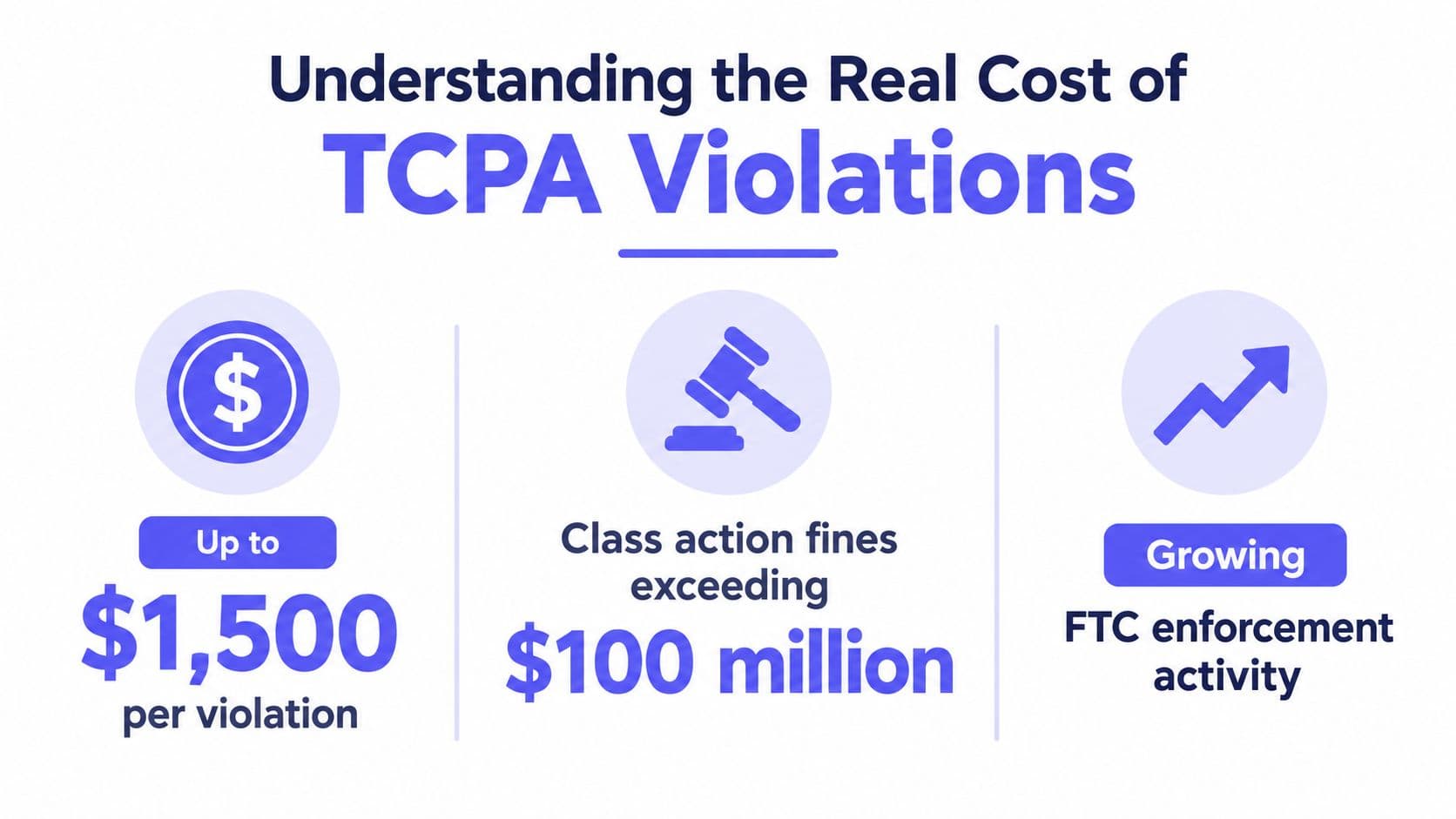
A National Do Not Call lookup is necessary, but it isn't a complete compliance strategy. An outbound team can still contact the wrong person, message someone who revoked consent, ignore an internal suppression request, call outside permitted hours, or lose the evidence needed to explain why a number was contacted. The National Do Not Call Registry held more than 258 million active registrations in fiscal year 2025, while consumers filed over 2.6 million complaints, according to the FTC's fiscal year 2025 data book. That scale makes manual list checking an unreliable operating model.
This comparison evaluates each tool by the compliance gate it provides. Some focus on DNC and state suppression. Others preserve consent evidence, validate reassigned numbers, identify known litigants, or enforce policies directly before a call or SMS leaves the stack. The practical questions are feature depth, pricing visibility, integration effort, team fit, and how much workflow enforcement the product provides.
Software can reduce operational risk, but it doesn't transfer the customer's legal responsibility to the vendor. Teams still need defensible consent, clear opt-outs, appropriate outreach policies, legal review, and human oversight.
1. GrowOutly
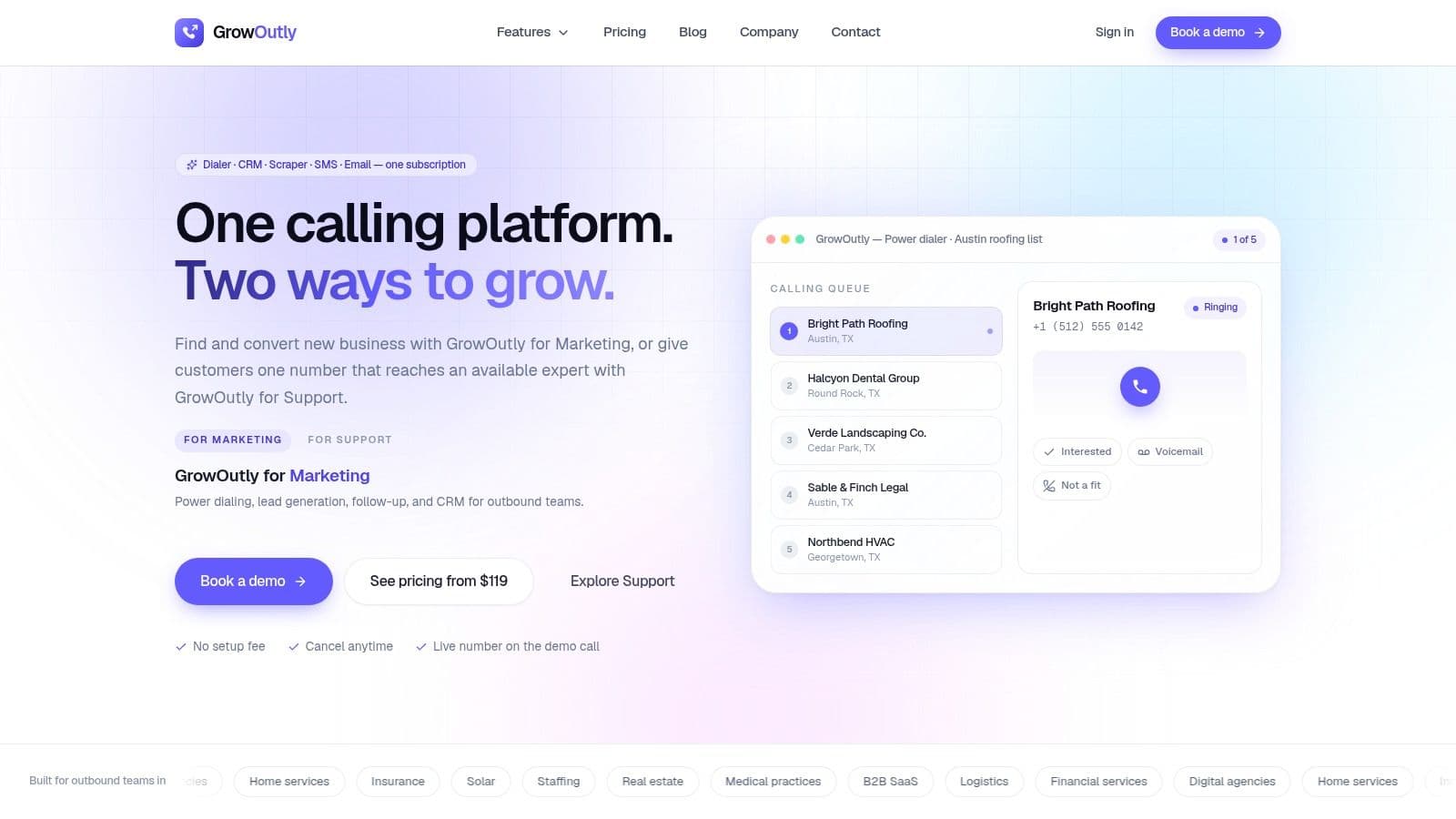
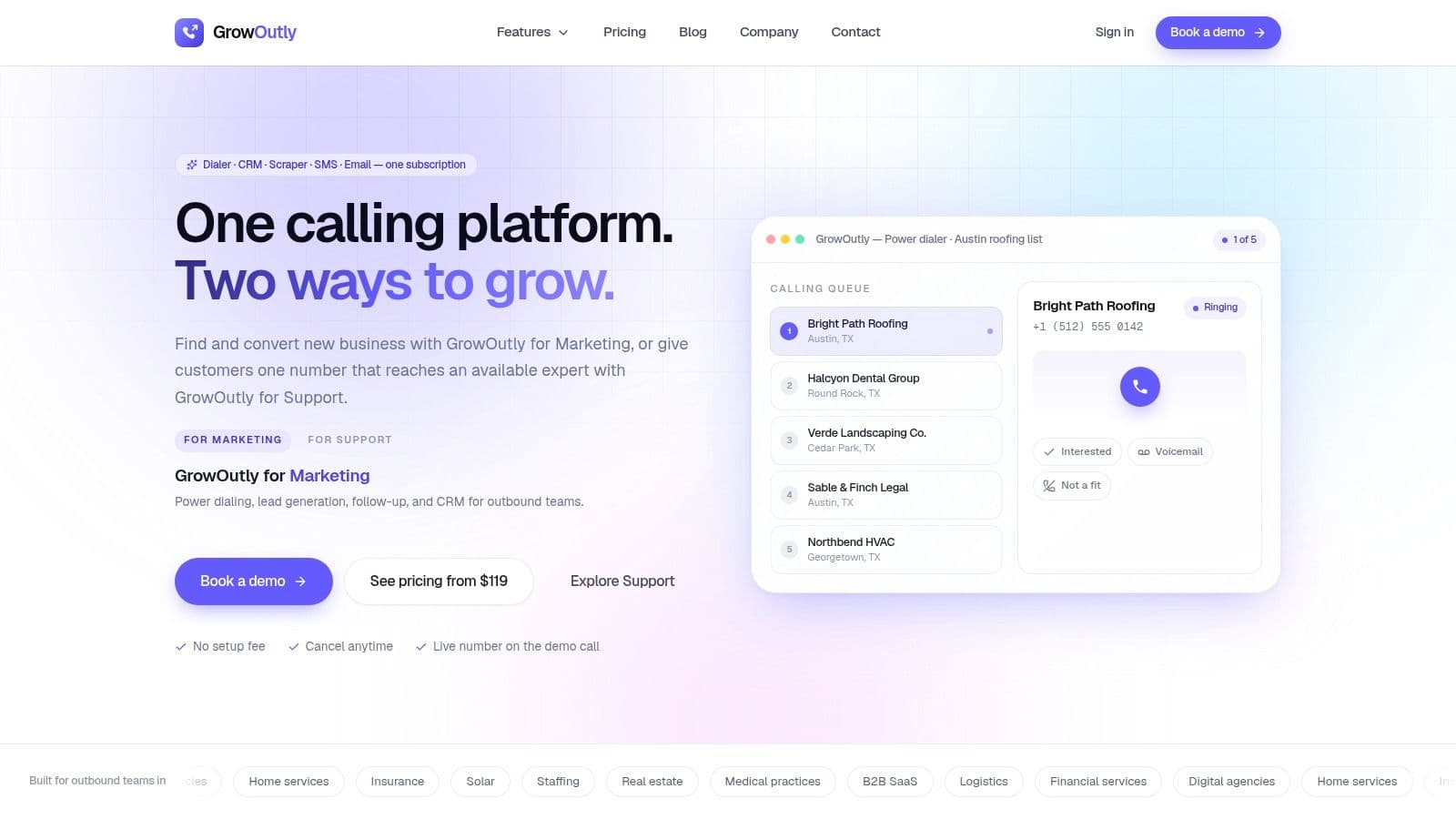
GrowOutly is designed for teams that want the compliance decision inside the same workspace as calling, texting, lead management, and follow-up. Its pre-dial and pre-SMS gate checks the National DNC Registry, 50-state DNC lists, curfew rules, and telemarketing litigator records before outreach begins. The practical distinction is timing: suppression is applied when a representative is preparing to act, rather than only during earlier list preparation. GrowOutly therefore functions as a point-of-action compliance gate, not a list-scrubbing utility.
The platform combines an outbound power dialer, inbound routing, two-way SMS and MMS, email sequences, calendar booking, lead sourcing, and a built-in CRM. Calls, texts, emails, recordings, transcripts, contact timelines, and audit logs remain connected. For a sales agency or local-services team, that shared record can reduce handoffs where consent context and opt-out requests may be missed.
The gate that matters
GrowOutly's main differentiator is workflow consolidation. A representative can source a lead, review its contact record, call, send a follow-up text, and book a meeting without moving among a scraper, dialer, CRM, and scheduler. The product also supports Google Maps lead scraping with CRM de-duplication, local-presence caller ID, voicemail drop, call recording, and role-based access.
These capabilities support operational control, but they do not establish that every contact is lawful. A blocked-number result cannot replace documented consent, a valid revocation process, or review of whether the lead source collected permission properly. The customer remains responsible for campaign decisions and outreach policies.
Practical rule: Treat GrowOutly's gate as a pre-action control, not as a legal opinion about the campaign.
Best fit
GrowOutly fits outbound sales teams, home-services businesses, staffing teams, agencies, and support organizations that need calling and SMS in one timeline. It may fit less well for a large enterprise with a rigorously governed Salesforce or contact-center environment that only needs a specialized data service.
The platform presents transparent, volume-based plans with allowances for minutes, SMS, numbers, seats, and email. Buyers should model expected usage and confirm which jurisdictions and outreach types are covered before deployment.
2. Contact Center Compliance
Contact Center Compliance, also known as DNC.com, is built around a deeper suppression gate than a basic National DNC lookup. Its DNCScrub and Litigator Scrub products support federal and state DNC screening, internal DNC lists, and known TCPA plaintiff suppression. The platform also provides wireless and VoIP detection and Reassigned Numbers Database checks.
The practical distinction is breadth. A team can use batch screening for list preparation or real-time API screening immediately before a call or message. That supports a layered workflow in which a lead is checked at intake, checked again after list changes, and screened at the point of outreach.
Where it fits in the stack
DNC.com is designed for organizations that already operate a contact center, CRM, or dialer ecosystem. Its connectors and integrations include platforms such as Salesforce, Five9, and Genesys, so the compliance decision can be connected to systems where agents work rather than handled in a separate spreadsheet.
That makes it a strong choice for enterprise teams with multiple dialing environments. The tradeoff is implementation effort. A business that only needs a simple opt-out list may find the platform heavier than necessary, while a contact center with several systems may value having DNC, RND, and litigator screening under one vendor.
The GrowOutly DNC compliance resource explains why pre-outreach screening belongs in the workflow, but DNC.com is better suited when a buyer needs a specialized compliance layer across existing infrastructure.
Best compliance gate: Federal, state, internal, RND, and litigator suppression.
Best fit: Large contact centers and CRM-led outbound operations.
Main limitation: Pricing is quote-based, and the implementation process can exceed the needs of a small team.
3. PossibleNOW DNCSolution 3.0
PossibleNOW DNCSolution 3.0 treats compliance as a contact-preference problem across multiple channels. Its controls cover phone, SMS, email, and postal outreach, with support for internal DNC, established business relationship logic, curfew checks, reassigned-number validation, and a Known Litigator List.
That cross-channel design matters for organizations where a contact can move between marketing, sales, service, and retention programs. A consumer's preference shouldn't disappear just because one team is using SMS while another is using email or voice. PossibleNOW's model is oriented toward keeping those decisions connected to broader customer data governance.
Salesforce-centered enforcement
The product's strongest differentiator is its integration with Salesforce Data Cloud. Teams that manage consent, preferences, and campaign eligibility inside Salesforce can use the platform to bring compliance checks closer to the customer record and activation workflow.
This isn't the same as having an all-in-one dialer. PossibleNOW is primarily a governance layer, so buyers should map exactly where a block is applied, how the result is returned to the calling or messaging system, and how evidence is retained. Integration design will determine whether the check is preventive or merely informational.
The solution is best suited to regulated industries and larger organizations that need more than voice suppression. Smaller teams may find its enterprise orientation difficult to justify if they don't have a central CRM or multiple communication channels to govern.
Best compliance gate: Preference governance across voice, SMS, email, and mail.
Best fit: Salesforce-centered enterprises and regulated marketing teams.
Main limitation: Pricing isn't publicly listed, and implementation requires careful scoping.
4. Gryphon ONE
Gryphon ONE takes a network-level approach to enforcement. Rather than leaving each application to interpret compliance rules independently, it provides centralized policy controls intended to screen and block non-compliant calls and texts before they connect.
That distinction is important in environments where several CRMs, dialers, contact-center platforms, or business units can initiate outreach. A policy engine can provide consistency, but only if every relevant path into the communications stack is connected to it.
Strongest at central control
Gryphon supports native connectors and APIs for major CRM and CCaaS environments. Its auditability and centralized policy model make it a candidate for organizations that need a common enforcement layer across systems. The platform is also positioned for organizations managing regulatory requirements beyond TCPA, which can matter when compliance teams need one control framework rather than separate rules for each channel.
The limitation is organizational. Gryphon ONE is likely to deliver the most value where outreach volume, system complexity, and governance requirements justify a dedicated platform. A small team with one dialer and a modest SMS program may prefer an integrated product with fewer moving parts.
Buyers should ask for a workflow demonstration showing what happens when consent is missing, a consumer revokes permission, a number appears on an internal DNC list, or an agent attempts to override a block. A policy engine is only useful when its decisions are visible and enforced consistently.
Best compliance gate: Real-time blocking before a call or text leaves the stack.
Best fit: Multi-system enterprises and heavily governed contact centers.
Main limitation: Pricing is not public, and procurement is sales-assisted.
5. ActiveProspect TrustedForm and LeadConduit
ActiveProspect is the most consent-centric option in this list. TrustedForm captures and certifies proof of consent for web-form leads, while LeadConduit routes leads and applies validation rules before distribution. The result is a way to preserve the origin and context of an opt-in rather than relying on a field that merely states “consented.”
This distinction becomes significant when a lead passes through several sellers, buyers, affiliates, or call centers. The FTC says a telemarketer or seller may call someone who gave express written agreement to receive calls from a specific party, even when that number is on the National DNC Registry, unless the person revokes consent. The FTC's telemarketer guidance therefore makes consent identity and revocation tracking operational controls, not paperwork extras.
Evidence before distribution
TrustedForm certificates can preserve consent evidence, including optional session replay, while LeadConduit can reject or route leads that fail configured requirements. That makes the product particularly useful for lead buyers and sellers that need to show what a consumer saw and what they agreed to before a lead reached an outreach team.
ActiveProspect isn't a DNC scrubber by itself. A buyer will commonly pair it with DNC, RND, and litigator screening, then pass the validated lead to a dialer or SMS platform. The TCPA compliance checklist from GrowOutly is useful context for the controls that still need to surround consent evidence.
Best compliance gate: Consent provenance and lead-level evidence.
Best fit: Lead marketplaces, aggregators, insurers, and high-volume web-form programs.
Main limitation: It needs companion tools for broader suppression and pre-send enforcement.
6. TransUnion TruContact Compliance Risk
TransUnion TruContact Compliance Risk addresses a risk that DNC tools can't fully solve, the possibility that the number no longer belongs to the person associated with the original lead or consent record.
Its consumer-to-phone linkage intelligence helps teams assess whether a phone number remains connected to the expected consumer. The offering also includes Registered Caller Agent services for the FCC's Reassigned Numbers Database and data designed to help prioritize valid, contactable numbers.
Why identity belongs before consent
Consent attached to the wrong person is not a reliable basis for outreach. A team may possess a valid historical record, yet still reach a new subscriber after a number has been reassigned. TruContact's role is therefore complementary. It can improve the quality of the phone identity decision before DNC, consent, and channel-specific policies are applied.
The platform is enterprise-oriented and will require integration work. Buyers should define whether the service is used for batch list hygiene, real-time pre-dial validation, lead scoring, or a combination of those functions. They should also establish what happens when identity confidence is weak, because a risk score that doesn't trigger a clear operational action won't protect the workflow.
TransUnion is a good fit for organizations with significant identity-data needs, especially when wrong-party exposure is a material concern. It isn't a complete TCPA compliance platform and shouldn't be evaluated as one.
Best compliance gate: Consumer-to-phone linkage and identity validation.
Best fit: Enterprise outreach teams with complex identity and data-quality requirements.
Main limitation: Packaging and pricing aren't publicly listed, and integration effort can be substantial.
7. Somos RealAgent
Somos RealAgent focuses on the Reassigned Numbers Database as a pre-outreach control. It provides API and high-throughput access to reassignment data so a team can check whether a phone number may have been disconnected and assigned to someone else.
That narrow scope is also its strength. A specialized RND service can fit into an existing dialer, CRM, lead router, or compliance orchestration layer without requiring a team to replace its communication platform. It can support both batch workflows for list preparation and real-time queries immediately before a call or SMS.
A precise role, not a complete stack
RealAgent should sit beside DNC, consent, internal suppression, and litigator controls. It answers an identity and reassignment question, not whether a campaign has permission to contact the person. The workflow should retain the relevant last-contact or consent context, apply the RND result, and record the decision before allowing outreach.
That architecture is valuable for high-volume operations where a full list is constantly changing. It also gives compliance teams a clear audit event to inspect when a number is rejected or permitted. The buyer still needs to decide how frequently numbers are checked and how stale results are handled.
Somos is best for organizations that already have a communications stack and want authoritative reassignment data as one component of a larger gate. Small teams may prefer a platform that bundles RND with other checks.
Best compliance gate: Reassigned-number eligibility through API or batch screening.
Best fit: High-volume teams with existing compliance orchestration.
Main limitation: It doesn't provide DNC, consent, or litigator screening on its own.
8. Reassigned Numbers Database
The official FCC-backed Reassigned Numbers Database is the direct source for checking whether a number was permanently disconnected after a specified date. It supports GUI access, SFTP workflows, and API querying, allowing teams to choose between manual review, file-based processing, and automated integration.
The database solves a specific problem. A person may have granted permission using a number that was later disconnected, after which a new subscriber received it. Recycling is routine in pooled overlay markets, as our guide to area code 832 sets out, which is why live subscriber status matters more than the history attached to the line. A current RND result can help a team avoid treating old consent as if it automatically follows the number to its new user.
Build the date logic correctly
RND checks depend on the dates and data captured by the customer's own systems. A compliance team must retain the relevant contact or consent date, pass the correct values into the query process, and store the result alongside the outreach decision. Without that context, access to the database doesn't create a defensible workflow by itself.
The GrowOutly explanation of TCPA compliance places this type of validation within a broader set of controls. That broader view is essential because the official RND program doesn't screen the National DNC Registry, internal suppression lists, consent scope, or known litigants. Regulated sellers usually wire all of those into one gate, which the cold calling playbook for insurance shows running in front of a territory-based motion.
Best compliance gate: Official reassignment checks.
Best fit: Teams that want a government-backed data source and can operate their own workflow.
Main limitation: It requires internal processes and companion controls for complete pre-outreach enforcement.
9. Blacklist Alliance
Blacklist Alliance is centered on litigation exposure. Its real-time Litigation Firewall and API-driven DNC and litigator scrubbing are designed to stop outreach to known TCPA plaintiffs and complainants before a call or text is placed.
This is a different gate from consent validation. A consumer can be absent from a litigator list and still lack permission to receive a marketing message. Conversely, a number may present a heightened operational risk because of prior complaints even when another system shows a potentially valid record. Blacklist Alliance is therefore best understood as a litigation-focused layer rather than a replacement for DNC or consent controls.
Dialer-side practicality
The platform provides hooks and integrations for common dialer ecosystems, along with training and compliance resources. That can make it easier for a team to place suppression closer to the agent's action instead of relying on a periodic export.
The buyer should test the timing of the block, the freshness of the data, the handling of internal opt-outs, and the audit record generated for each rejected contact. The most useful deployment is one where the agent can't bypass the firewall just by switching channels from voice to SMS.
Blacklist Alliance is a practical addition for teams that already have DNC and consent systems but want explicit litigator screening. Pricing isn't publicly listed, so procurement requires a sales conversation.
Best compliance gate: Real-time known-litigator and complainer suppression.
Best fit: High-volume dialers and organizations concerned about litigation targeting.
Main limitation: A litigator list complements, rather than replaces, consent, DNC, RND, and curfew controls.
10. TCPA Litigator List
TCPA Litigator List offers a focused database for litigant and complainer suppression. Its workflow includes batch scrubbing, phone-number lookups, name-based matching, and a real-time API, giving teams several ways to apply the data before outbound activity.
The product's narrower scope can be useful when a business already has a DNC provider and only needs a dedicated litigator source. Its published subscription tiers also make it easier for smaller teams to evaluate the service without committing immediately to a broad enterprise platform.
Use it as a targeted layer
A litigator database cannot establish consent, identify every reassigned number, enforce calling hours, or manage SMS opt-outs. It should be placed after or alongside those checks, not treated as a universal TCPA decision. The best workflow records the result, blocks the contact when appropriate, and keeps the reason visible to supervisors and auditors.
Name matching also deserves human review. A name-based result can require additional validation before a record is suppressed or released, particularly when multiple contacts share similar details. Teams should define how agents handle uncertain matches rather than allowing ad hoc decisions during a live campaign.
Best compliance gate: Dedicated litigant and complainer screening.
Best fit: Small and mid-sized teams seeking a focused, self-serve supplement.
Main limitation: It must be paired with DNC, consent, RND, and outreach-policy controls.
Top 10 TCPA Compliance Tools Comparison
| Product | Core features ✨ | Compliance & risk controls ✨ | UX / Quality ★ | Target audience 👥 & Price 💰 |
|---|---|---|---|---|
| GrowOutly 🏆 | Power dialer + voicemail drop, inbound IVR/routing, Google Maps scraper, 2‑way SMS/MMS, email sequences, built‑in CRM | Pre‑dial/pre‑SMS compliance gate (Nat'l & 50‑state DNC, litigator) <45ms; RND pairing; audit logs | Auto activity logging, recordings & transcripts, 99.95% uptime, faster rep conversations ★★★★ | 👥 Outbound sales, local/home‑services & support; 💰 Base $119/mo → Pro $319 → Essentials $819 → Enterprise |
| Contact Center Compliance (DNC.com) | Real‑time & batch DNC scrubbing via API; RND & litigator suppression | Deep federal/state DNC + litigator + RND coverage; native CCaaS/CRM connectors ✨ | Enterprise integrations, auditability, scalable enforcement ★★★★ | 👥 Enterprise contact centers; 💰 Quote‑based |
| PossibleNOW, DNCSolution 3.0 | Real‑time DNC, EBR, curfew & RND checks; Known Litigator list; Salesforce Data Cloud integration | Cross‑channel governance (voice/SMS/email/post); in‑CRM enforcement ✨ | In‑flow Salesforce governance; strong audit trails ★★★★ | 👥 Regulated industries & Salesforce users; 💰 Quote‑based |
| Gryphon ONE (gryphon.ai) | Network‑level screening/blocking, centralized policy engine, APIs/connectors | Real‑time automated DNC/TCPA screening and blocking before send ✨ | Real‑time enforcement at network layer; centralized audit logs ★★★★ | 👥 Large orgs / CCaaS platforms; 💰 Sales‑assisted pricing |
| ActiveProspect, TrustedForm + LeadConduit | TrustedForm consent capture & certificates, optional session replay; LeadConduit routing/validation | Defensible proof of opt‑in; reject non‑compliant leads pre‑delivery ✨ | Evidence retention and modular workflows; integrates to lead stacks ★★★★ | 👥 Lead buyers/sellers & compliance teams; 💰 Module/volume pricing |
| TransUnion (Neustar), TruContact | Consumer‑to‑phone linkage, number validation, analytics to prioritize contacts | RND agent services; identity‑backed validation to reduce wrong‑party risk ✨ | Telco/identity data strength; prioritizes valid numbers ★★★★ | 👥 Enterprises needing identity validation; 💰 Enterprise pricing |
| Somos, RealAgent | Authoritative RND API; high‑throughput & real‑time eligibility checks | Pre‑dial reassignment checks to avoid disconnected/reassigned numbers ✨ | Scales for batch & real‑time queries; reliable RND source ★★★★ | 👥 Large batch/outbound teams; 💰 Sales‑assisted pricing |
| Reassigned Numbers Database (RND), FCC | Official RND queries via GUI/SFTP/API; tiered prepaid subscriptions | Government‑backed reassignment data; predictable per‑query economics ✨ | Authoritative source; published tiers and docs ★★★ | 👥 Compliance teams needing authoritative RND; 💰 Published tier pricing |
| Blacklist Alliance | API litigator & DNC scrubbing, Litigation Firewall, dialer integrations | Real‑time blocking of known plaintiffs/complainers; training resources ✨ | Dialer hooks and focused litigation protection; easy integration ★★★ | 👥 Teams defending against serial TCPA plaintiffs; 💰 Sales‑assisted pricing |
| TCPA Litigator List | Batch & API litigant scrubbing, name‑based matching, number lookups | Explicit litigant suppression with published subscription tiers ✨ | Transparent self‑serve tiers; easy to trial; straightforward UI ★★★ | 👥 SMBs & teams needing litigator suppression; 💰 Self‑serve tiers (Basic→API) |
Build a Compliance Gate That Matches Your Outreach
The best tcpa compliance software isn't necessarily the product with the longest feature list. It's the system that blocks the right action at the right point and preserves enough evidence for a supervisor, compliance officer, or legal reviewer to understand what happened.
Choose an integrated platform such as GrowOutly when calling, SMS, CRM records, lead sourcing, scheduling, and enforcement need to live in one workflow. That model reduces handoffs and makes it easier to connect a contact's suppression status with the rep's next action. It's especially practical for agencies, local-services teams, staffing businesses, and support organizations that don't want to assemble separate systems for dialing, messaging, and activity logging. Power dialer CRM covers how that write-back should behave, which matters here because a suppression event is only defensible if it lands on the same record the rep works from.
Choose enterprise governance when Salesforce, Data Cloud, Genesys, Five9, or a multi-system contact center is central to the operating model, and weigh the calling layer alongside it with our comparison of 10 outbound call center software platforms. PossibleNOW and Gryphon ONE are better aligned with centralized policy enforcement, while Contact Center Compliance is a strong option for broad DNC, internal suppression, RND, and litigator coverage across established contact-center infrastructure.
Add a consent-evidence product when your main weakness is proving where a lead came from and what the consumer agreed to. ActiveProspect can help preserve that provenance, but it doesn't eliminate the need for DNC, reassigned-number, and message-level controls. Add TransUnion, Somos, or the official RND program when number ownership and reassignment are material risks. Add Blacklist Alliance or TCPA Litigator List when known litigants and complainers need a dedicated suppression layer.
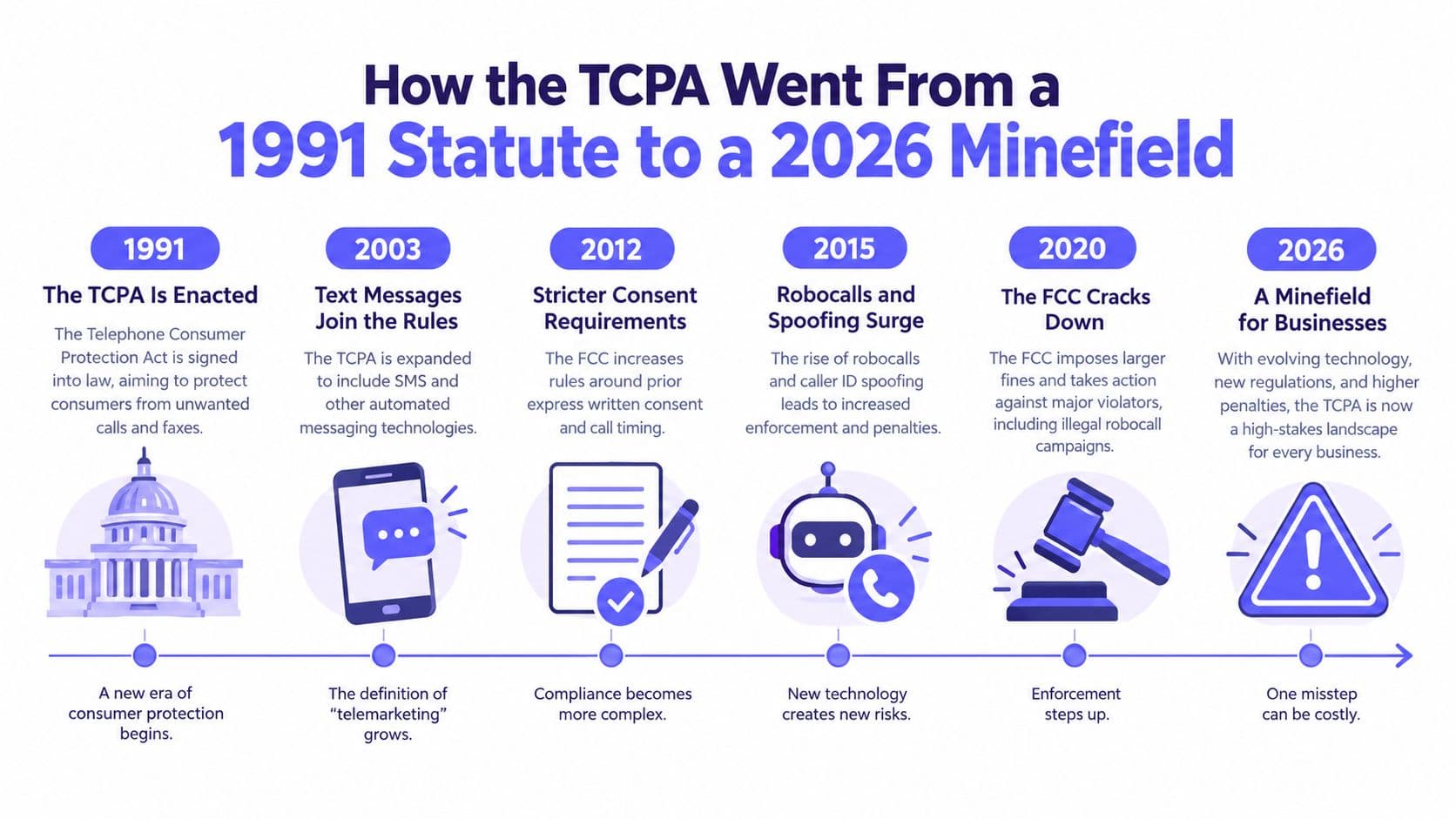
Regulatory changes also make channel coordination more important. The FCC's one-to-one consent rule was associated with a January 27, 2025 effective date, while the rule's legal path changed after court action in January 2025. Separate revocation requirements tightened in April 2025. Teams therefore need to track consent status, revocation, and proof across vendors instead of assuming that a dialer's list scrub answers every question. The dialing mode is part of that exposure too, since power dialer vs predictive dialer is partly an argument about abandonment risk, and a system that dials ahead of its reps has more ways to breach a rule nobody scrubbed for.
For every call or SMS, the operating checklist should cover:
- Documented consent: Record what the person agreed to, which seller or purpose it covered, how it was collected, and whether it has been revoked.
- National and state DNC screening: Check the relevant federal and state suppression sources before outreach, not only when a list is first uploaded.
- Internal suppression: Apply company-specific DNC requests and channel preferences consistently across calling, SMS, and other campaigns.
- Curfew rules: Prevent calls and messages from being initiated outside the permitted local-time window or a stricter internal policy.
- Reassigned numbers: Validate that the number still belongs to the expected consumer before relying on historical consent.
- Litigator screening: Run a dedicated check where litigation and complaint exposure justify it.
- Message governance: Review the sender identity, opt-in disclosure, message and data-rate notice, expected frequency, and opt-out instructions. Common SMS subscription keywords include JOIN, SUBSCRIBE, and START. Common stop commands include STOP, END, CANCEL, QUIT, REVOKE, OPT OUT, and UNSUBSCRIBE, but systems should define and honor their supported commands consistently.
- Audit logs: Preserve the rule results, consent evidence, suppression reason, timestamp, agent or system action, and any override decision.
- Human review: Route ambiguous identity matches, unclear consent, unusual revocation requests, and policy exceptions to a trained person.
For SMS specifically, the FCC states that autodialed or prerecorded calls and texts to wireless numbers require prior consent, while manual messages can be sent without prior consent. Marketing texts to wireless numbers on the National DNC Registry require prior express invitation or permission, according to FCC consumer guidance on unwanted calls and texts. That means the workflow must distinguish channel, technology, purpose, and consent status instead of treating every message as interchangeable.
Operational practices matter as much as software selection. SMS programs should use clear opt-in disclosures, identify the sender, explain that message and data rates may apply, state estimated message frequency, provide an easy opt-out path, and honor opt-outs immediately. Those practices are summarized in SMS compliance guidance from Business.com, but teams should still have counsel review the language and workflow for their jurisdictions.
Software reduces the number of preventable mistakes. It can stop a restricted call, preserve a certificate, query an RND source, or prevent a text from leaving the system. It can't create consent that was never collected, make an unclear disclosure adequate, decide every state-law question, or replace accountable outreach policies. The strongest deployment combines a clearly defined consent process, synchronized suppression data, pre-send enforcement, audit-ready records, trained agents, and legal review when the campaign or technology creates uncertainty.
GrowOutly brings outbound dialing, inbound routing, two-way SMS and MMS, CRM records, lead sourcing, scheduling, audit logs, and pre-dial and pre-SMS checks into one workspace. If you want to reduce tool fragmentation while screening National DNC, state DNC, curfew, and litigator risks before outreach, visit GrowOutly to evaluate the platform for your calling and SMS workflow.